Air Quality Testing in Los Angeles, CA
Professional indoor air quality testing and air sampling for homes, rentals, offices, and commercial properties where mold, moisture, or indoor environmental conditions are a concern.
Understand Indoor Conditions Beyond What You Can See
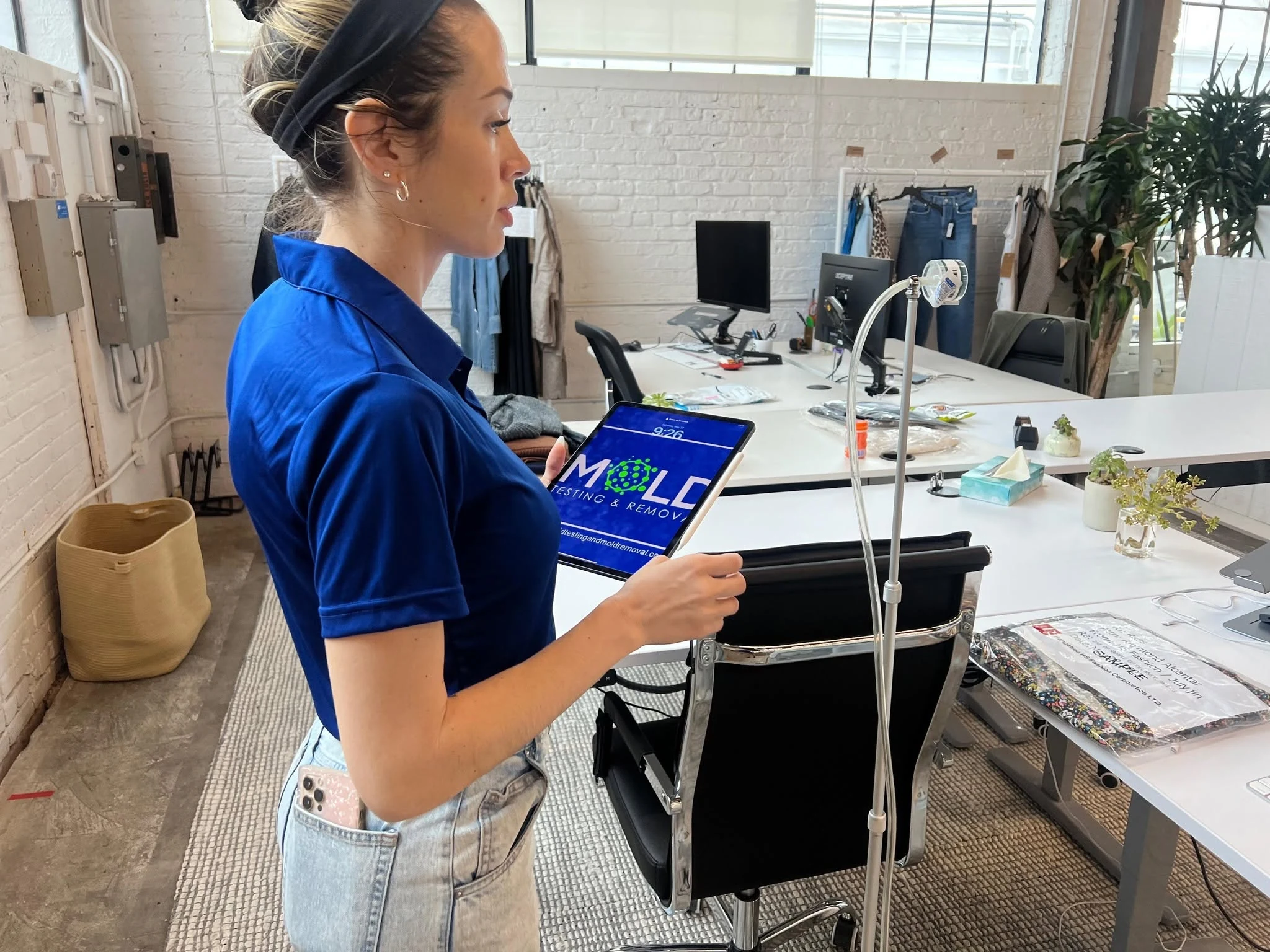
Indoor air quality testing can be useful when a property has suspected mold, a history of water damage, persistent moisture, or other conditions that justify a closer look at the indoor environment.
- Air sampling when appropriate
- Visual inspection of areas of concern
- Evaluation of moisture conditions
- Review of previous leaks or water damage
- Testing combined with property observations
Conditions That May Justify Indoor Air Evaluation
Air sampling is not automatically required for every property. The reason for testing and the conditions found during inspection help determine whether sampling may provide useful information.
There is concern about mold in the property even when obvious surface growth is limited or not visible.
The building has experienced a leak, flood, roof problem, or another moisture event.
Inspection suggests that moisture may be present inside walls, ceilings, cabinets, or other concealed areas.
Air sampling may be used as part of a broader property assessment or after certain remediation projects.
Air Samples Are One Part of the Property Evaluation
Air sampling can provide additional information about indoor airborne conditions, but results are most useful when interpreted together with the inspection, moisture findings, and reason for the test.
- Indoor air sample collection
- Sampling locations based on property conditions
- Comparison with site observations
- Review alongside moisture and mold findings
- Follow-up recommendations based on the overall evaluation
A Complete Indoor Mold Evaluation Looks at More Than Air
Indoor air conditions can be influenced by moisture, building materials, previous water damage, and visible mold. A broader property evaluation helps put air sampling results into context.
Air Sampling
Indoor samples may be collected when airborne conditions are relevant to the purpose of the evaluation.
Visual Mold Inspection
Accessible areas are reviewed for visible mold, staining, deterioration, and water-related damage.
Moisture Measurements
Moisture meters can help identify materials that may still be damp or affected by water intrusion.
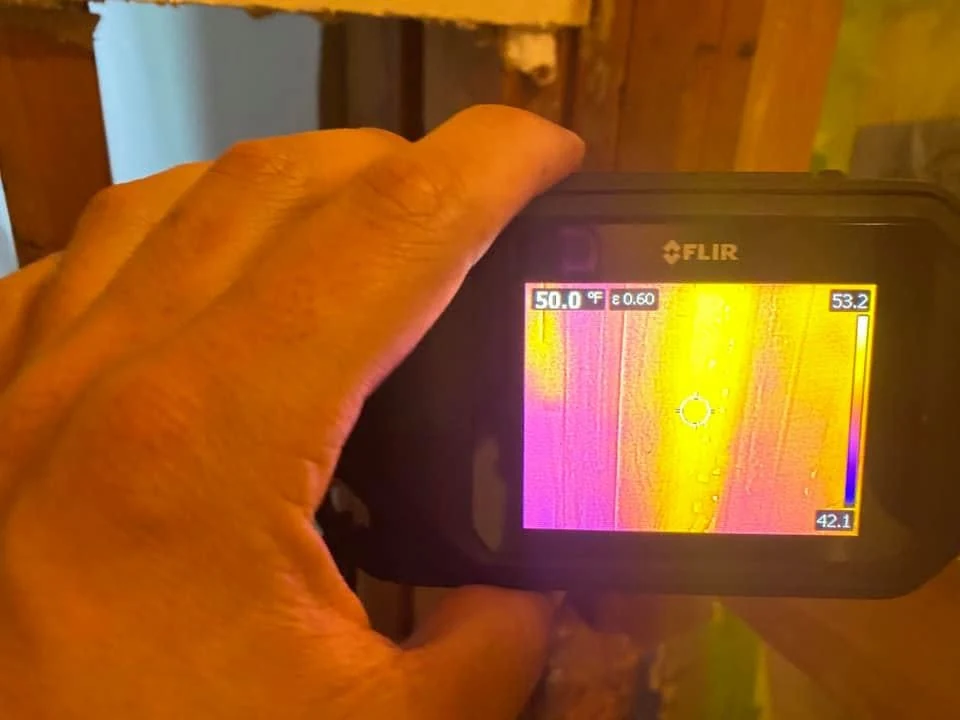
Thermal Imaging
Thermal imaging may support further investigation of areas showing temperature patterns associated with possible moisture.
Surface Sampling
Suspected surface growth may be sampled when additional information about a specific area is useful.
Site History Review
Previous leaks, repairs, flooding, or recurring moisture problems can provide important context for the evaluation.
Indoor Air Concerns Often Begin With a Moisture Problem
Mold-related indoor air concerns are often connected to moisture somewhere in the building. Locating water intrusion or damp materials can be an important part of understanding the overall property condition.
- Plumbing leaks
- Roof or ceiling water intrusion
- Moisture behind walls
- Wet or damaged cabinets
- Previously flooded building materials
What to Expect During Air Quality Testing
The scope depends on the reason for testing and the property conditions. The goal is to collect useful information while also evaluating potential moisture and mold sources.
Review the property’s history, visible conditions, and reason for requesting air quality testing.
Evaluate accessible areas for mold, water damage, and signs of moisture.
Determine whether air sampling is appropriate and where samples should be collected.
Perform the selected air or related sampling based on the evaluation plan.
Consider testing information together with inspection and moisture findings.
Indoor Air Quality Testing for Different Property Types
Air quality and mold-related concerns can occur in homes, apartments, rental properties, offices, and commercial buildings. The testing approach can be adjusted to the property and reason for the evaluation.
- Single-family homes
- Apartments and rental properties
- Managed properties
- Offices and commercial spaces
- Buildings affected by water damage
Mold & Moisture Services That Support Air Quality Evaluation
Indoor air testing may be combined with inspection, moisture detection, or additional mold sampling depending on the property conditions.
Air Quality Testing in Los Angeles & Surrounding Areas
Indoor air quality and mold testing services are available throughout Los Angeles and surrounding Southern California communities.
Common Questions About Indoor Air Quality Testing
What does indoor air quality testing include?
The scope depends on the reason for the evaluation. It may include property inspection, moisture evaluation, air sampling, and other mold-related testing when appropriate.
Is air sampling the same as mold testing?
Air sampling can be one component of mold testing, but mold evaluation may also include visual inspection, surface sampling, and moisture detection.
Should I test the air after water damage?
The appropriate evaluation depends on the extent of the water event, how long materials remained wet, and what conditions are found during inspection.
Can indoor air testing find hidden mold?
Air sampling may provide useful information, but hidden mold is better evaluated together with inspection, moisture measurements, and other property conditions.
Do you inspect the property before sampling?
Property observations and moisture conditions are important context for determining whether air sampling is appropriate and how the evaluation should be approached.
Do you provide remediation if mold is found?
Yes. Mold removal and remediation services are available based on the conditions found at the property.
Need Help With Mold or Moisture?
Tell us what is happening at your property. Submit the form and our team will follow up about your mold testing, inspection, removal, remediation, or moisture concern.