Mold Testing & Mold Removal FAQ
Answers to common questions about mold testing, inspections, air sampling, hidden moisture, mold removal, remediation, water damage, and post-remediation services.
Browse Mold, Moisture & Remediation Topics
Use these topic links to jump to the section most relevant to your property concern.
Mold Testing Questions
Mold testing can provide additional information when the condition is not fully understood from visual inspection alone.
What is mold testing?
Mold testing is the collection and evaluation of samples when additional information may help assess a suspected mold condition. Depending on the situation, this may involve air sampling, surface sampling, or other sampling methods.
Learn more on our Mold Testing page.
Do all mold inspections require testing?
No. Testing is not automatically necessary for every mold or moisture concern. The appropriate approach depends on the purpose of the inspection, visible conditions, water history, and information needed about the property.
What types of mold samples may be collected?
Depending on the inspection, sampling may include air samples or surface samples. The type and number of samples depend on the reason for testing and conditions found.
See our Air Sampling and Mold Sampling pages.
Can you test when mold is not visible?
Yes. A property may be evaluated when hidden mold or concealed moisture is suspected. Inspection and moisture evaluation can help determine whether sampling may provide useful additional information.
Do you offer air-quality or air-sampling services?
Yes. Air sampling and air-quality testing are among the mold-related services available when appropriate for the purpose of the evaluation.
Visit Air Quality Testing or Air Sampling.
Inspection & Mold Detection Questions
Inspection helps evaluate visible conditions, water history, and areas where mold or moisture may be concealed.
What happens during a mold inspection?
The inspection may include review of visible conditions, moisture-related damage, suspect materials, leak history, and areas where concealed moisture may be present. Moisture measurements or other inspection methods may also be used when appropriate.
Read more about Mold Inspection.
Can mold be hidden behind drywall?
Mold or moisture-related conditions can occur behind finished surfaces when water has reached a wall cavity. Inspection focuses on evidence of moisture and the building materials that may have been affected.
Can you inspect mold after a plumbing leak?
Yes. Plumbing leaks can affect cabinets, drywall, flooring, ceilings, and concealed wall areas. Even after the plumbing source is corrected, surrounding materials may still require evaluation.
What is the difference between mold inspection and mold detection?
Mold inspection is the broader property evaluation, while mold detection focuses on identifying signs or conditions associated with suspected mold. The two services may overlap depending on the situation.
See Mold Detection for more information.
Hidden Moisture Questions
Understanding where moisture has moved is important when mold concerns are connected to plumbing or water damage.
How do you check for moisture behind walls?
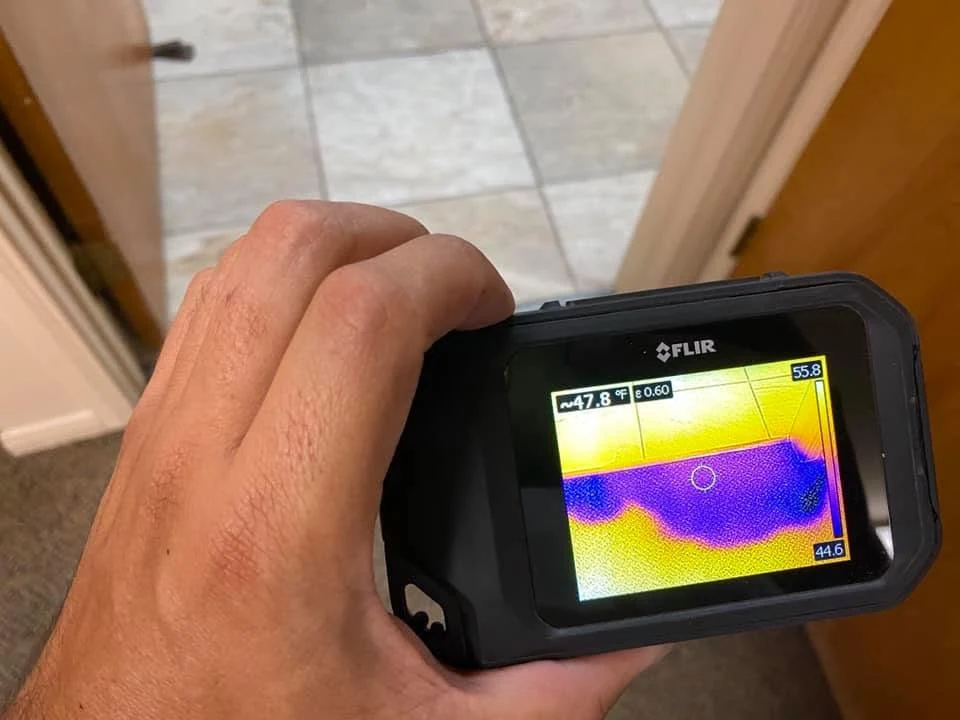
Moisture meters, thermal imaging, visual inspection, and targeted evaluation may be used to identify areas that warrant closer examination.
Visit Moisture Intrusion Detection .
Does thermal imaging detect mold?
No. Thermal imaging does not directly detect mold. It shows temperature patterns that may help guide further moisture inspection. Other inspection methods are needed to evaluate the actual condition.
Can drywall still be wet even if the surface looks dry?
Yes. Moisture can remain inside drywall, framing, wall cavities, flooring assemblies, or other materials after the visible surface begins to appear dry.
Should a previously repaired leak area still be checked?
If there are ongoing stains, dampness, visible growth, recurring odors, or other reasons to suspect remaining moisture, further evaluation may be appropriate.
Mold Removal & Remediation Questions
Remediation methods depend on the materials affected, the work area, moisture condition, and project scope.
What is the difference between mold removal and mold remediation?
Mold removal generally refers to removing or cleaning affected materials. Mold remediation is the broader process that may include containment, controlled removal, HEPA cleaning, air management, and detailed cleanup.
Compare our Mold Removal and Mold Remediation pages.
Does all mold-damaged drywall need to be removed?
Not automatically. The appropriate treatment depends on the material condition, extent of damage, moisture, and project scope. Some materials may be cleaned, while others may need removal.
Is containment always required during remediation?
Not every project uses the same containment setup. The work area, affected materials, removal activities, and project conditions help determine whether containment is appropriate.
Is fogging the same as mold remediation?
No. A remediation project may involve several methods, and fogging alone should not be treated as a universal substitute for evaluating and addressing affected materials.
What is mold abatement?
Mold abatement generally refers to reducing or removing mold-affected materials and conditions according to the project scope. The exact methods depend on the property and materials involved.
Visit Mold Abatement.
A Mold Problem Often Requires Looking Beyond the Visible Surface
The visible stain, leak, or mold-like growth may not show every material affected by moisture. Walls, ceilings, cabinets, flooring, and concealed cavities may need separate evaluation.
- Find the source of water or moisture
- Evaluate nearby materials
- Check concealed areas when appropriate
- Determine whether testing is useful
- Define the correct remediation scope
Water Damage & Leak Questions
Water-damage evaluation focuses on affected materials, remaining moisture, drying needs, and related mold concerns.
Do you provide water damage restoration?
Yes. Water-damage services include evaluation of wet materials, moisture detection, drying needs, material assessment, and related mold concerns.
Visit Water Damage Restoration .
Can water damage cause a mold concern?
Wet or persistently damp building materials can create conditions where mold becomes a concern. The appropriate response is to evaluate both the moisture source and materials affected.
Can you help identify a leak?
Leak-related evaluation is available. Inspection may focus on plumbing areas, visible water damage, moisture patterns, and building materials near the suspected source.
See Leak Detection.
When is structural drying used?
Drying equipment may be used when building materials contain moisture and drying is appropriate for the material and project conditions. Not every water-damage situation uses the same drying setup.
Post-Remediation & Clearance Questions
Follow-up evaluation may be useful after remediation depending on the reason for the project and property conditions.
What is a post-remediation inspection?
A post-remediation inspection reviews conditions after remediation work has been completed. The inspection may consider visible conditions, moisture, and whether additional testing is appropriate.
What is clearance testing?
Clearance testing is follow-up testing performed after remediation when sampling is appropriate for the purpose of evaluating the completed work area.
Visit Clearance Testing.
Is clearance testing always required?
No. Whether clearance testing is appropriate depends on the project, reason for remediation, requested scope, and follow-up requirements.
Can moisture be checked again after remediation?
Yes. Moisture may be evaluated again when appropriate as part of a post-remediation review.
Business & Service Request Questions
Contact information and general questions about requesting mold, moisture, or water-damage service.
What types of properties do you service?
Services are available for residential properties, rental and managed properties, and commercial spaces depending on the requested service and project conditions.
Are you available 24/7?
The business is listed as open 24/7. Call (424) 369-7947 to discuss your mold, moisture, leak, or water-damage concern.
Where is Mold Testing & Mold Removal located?
The business address is 5208 W Pico Blvd Suite #2, Los Angeles, CA 90019.
How do I request service?
Call (424) 369-7947 or submit the service request form below with the property location and a description of the concern.
What information should I provide when requesting service?
Helpful information includes the property location, type of concern, where the issue is visible, whether there has been a known leak or water event, and which service you are requesting if known.
Learn More About Mold, Moisture & Water-Damage Services
Visit the individual service pages for more detailed information about the inspection, testing, remediation, and follow-up options.
A Simple Path From Property Concern to the Appropriate Service
The exact process depends on the property condition and service requested.
Describe the mold, moisture, leak, or water-damage concern.
Review visible conditions and relevant areas of the property.
Check moisture or collect samples when appropriate.
Complete the appropriate drying, removal, or remediation scope.
Determine whether additional inspection or testing is appropriate.
Mold Services Across Los Angeles & Southern California
Browse our city pages or visit the complete service-area directory.
Need Help With Mold or Moisture?
Tell us what is happening at your property. Submit the form and our team will follow up about your mold testing, inspection, removal, remediation, or moisture concern.