Leak Detection in Los Angeles, CA
Professional leak and moisture evaluation for properties with water staining, wet drywall, ceiling damage, under-sink leaks, hidden moisture, and mold-related concerns.
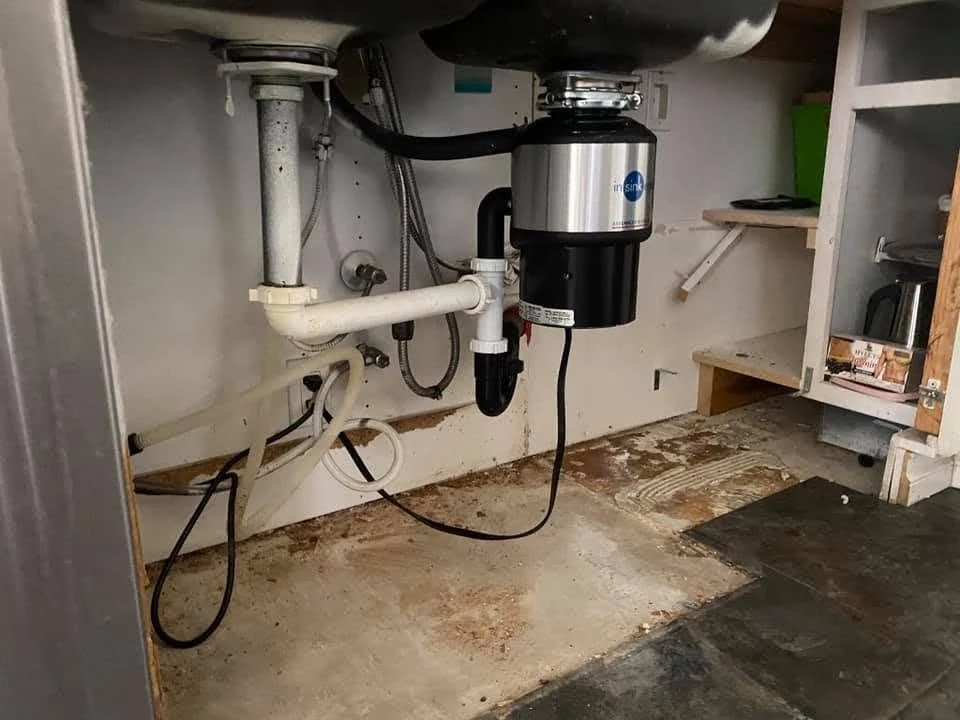
A Small Leak Can Affect More Building Material Than You Expect
Water can move through drywall, cabinetry, ceilings, wall cavities, flooring, and other materials. Leak detection begins by reviewing visible damage and identifying where moisture may be traveling.
- Under-sink and plumbing leaks
- Ceiling and roof-related water intrusion
- Wet drywall and wall cavities
- Cabinet and flooring moisture
- Recurring damp or stained areas
Property Conditions That Deserve Closer Inspection
Some leaks are obvious, while others show up only through changes in building materials or recurring moisture.
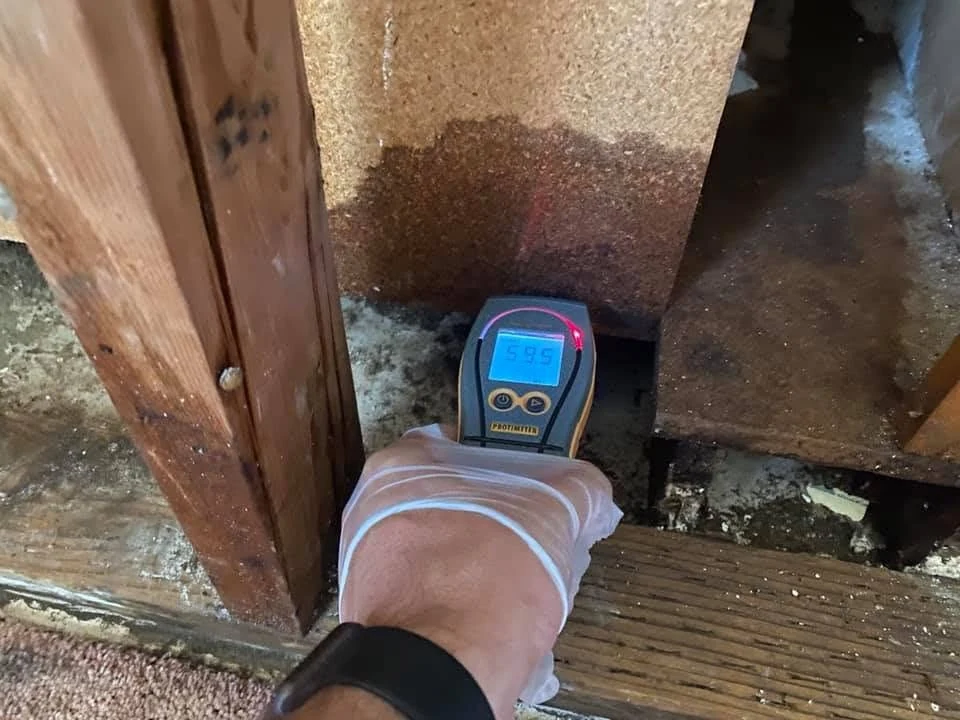
Brown or discolored areas on walls and ceilings may indicate previous or active water intrusion.
Damp, swollen, or deteriorated drywall may indicate water traveling inside the wall assembly.
Plumbing leaks beneath sinks can affect cabinet bases, adjacent drywall, and flooring.
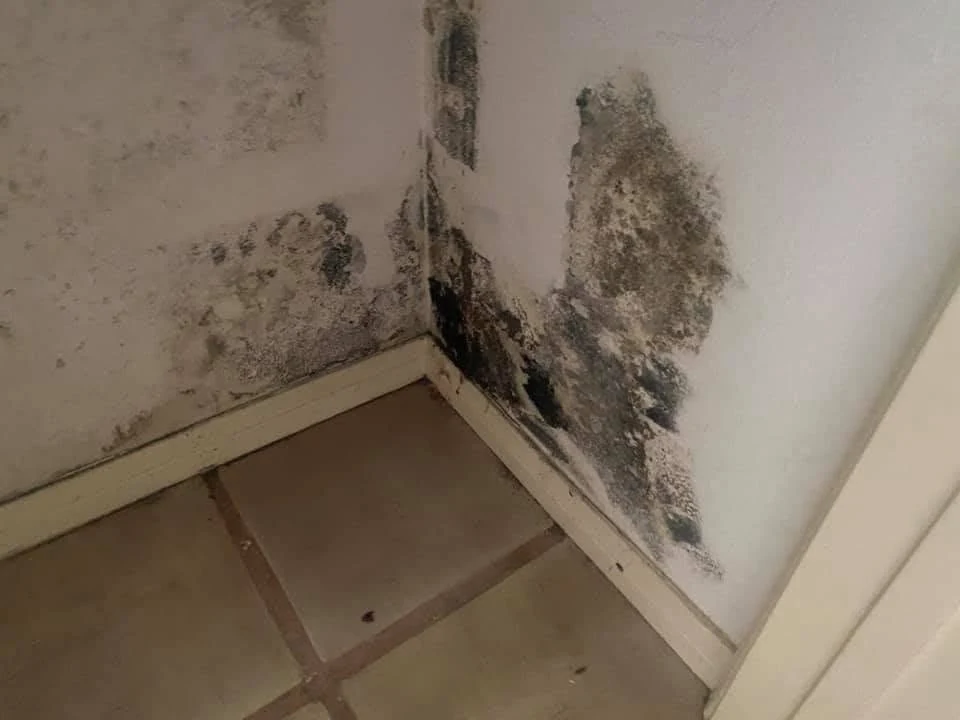
Mold that repeatedly returns can be a sign that an underlying moisture condition remains unresolved.
Identify Areas That May Need Additional Moisture Testing
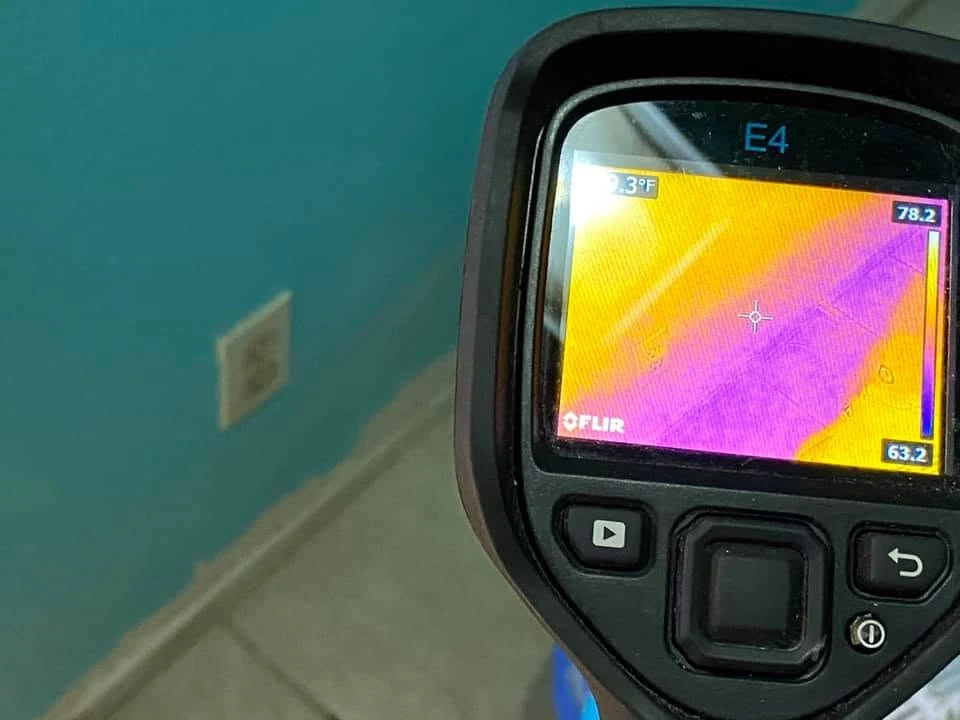
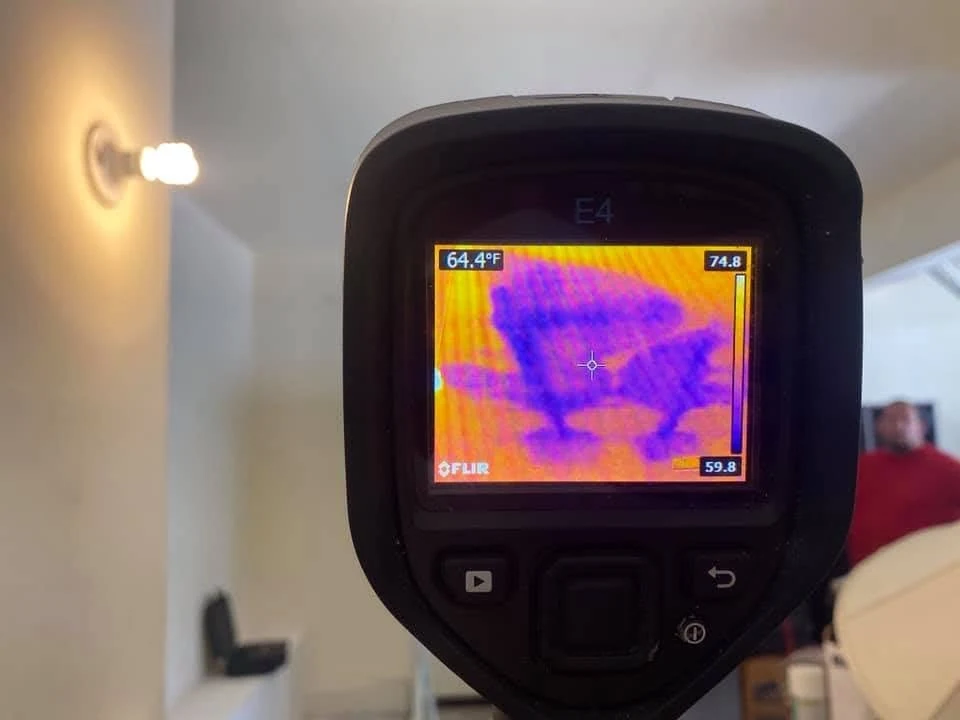
Thermal imaging can identify temperature differences that may justify closer inspection. It does not prove that a leak exists by itself, so thermal observations should be evaluated together with moisture readings and property conditions.
- Walls near plumbing lines
- Ceilings below bathrooms or upper floors
- Areas around windows and exterior openings
- Previously repaired water-damaged areas
- Locations with recurring staining or dampness
Multiple Inspection Methods Can Help Narrow Down the Problem
The appropriate approach depends on the location, visible damage, and property history.
Visual Inspection
Review staining, wet materials, deterioration, and other visible signs of water intrusion.
Moisture Readings
Moisture meters can help compare suspected affected materials with nearby building areas.
Thermal Imaging
Thermal patterns can help identify areas that warrant closer moisture investigation.
Wall-Cavity Inspection
Concealed areas may require targeted evaluation when surrounding conditions suggest hidden water intrusion.
Water Damage Review
Previous leaks, repairs, flooding, or repeated moisture can provide useful context for the inspection.
Mold Inspection
Areas exposed to ongoing moisture may require mold evaluation depending on what is found.
Plumbing Leaks Can Affect Cabinets, Walls & Flooring
Water beneath sinks can spread into cabinet materials, drywall, wall cavities, and flooring. Even after a plumbing repair, surrounding materials may need to be checked for retained moisture.
- Sink supply and drain areas
- Cabinet bases and back panels
- Drywall surrounding plumbing penetrations
- Flooring beneath cabinets
- Hidden wall-cavity moisture
Water Stains May Point to a Problem Above or Behind the Surface
Ceiling and wall staining may be connected to plumbing, roof intrusion, or water traveling from another area of the building. The visible stain is not always the exact source.
- Ceiling staining and discoloration
- Moisture near upper-floor plumbing
- Water around exterior walls
- Damp wall cavities
- Repeated stains after previous repairs
Hidden Moisture Can Be Connected to Mold Conditions
When a leak keeps building materials damp, mold may become a concern in visible or concealed areas. Finding the moisture source helps provide context for mold inspection and remediation decisions.
- Visible mold-like growth near leaks
- Recurring mold after surface cleaning
- Wet drywall and wall cavities
- Water-damaged cabinets
- Previously flooded or repeatedly damp areas
From Visible Damage to a More Focused Moisture Evaluation
The process depends on the property and type of leak concern, but the goal is to identify the affected area and determine what additional action may be appropriate.
Discuss visible damage, leak history, repairs, and areas where moisture is suspected.
Review accessible walls, ceilings, cabinets, and other affected building materials.
Use moisture readings and other inspection methods in relevant areas.
Compare observations and readings to narrow down where further investigation may be needed.
Consider repair, drying, water damage restoration, or mold evaluation depending on the findings.
Services Connected to Leaks & Hidden Moisture
Leak concerns often overlap with moisture detection, water damage, mold inspection, and remediation.
Leak Detection in Los Angeles & Surrounding Areas
Leak, moisture, water damage, and mold-related inspection services are available throughout Los Angeles and surrounding Southern California communities.
Common Questions About Leaks & Hidden Moisture
What are common signs of a hidden leak?
Water stains, wet or soft drywall, recurring dampness, cabinet damage, ceiling discoloration, and repeated mold concerns can all justify further leak and moisture evaluation.
Can thermal imaging find a leak?
Thermal imaging can identify temperature patterns that may indicate an area requiring closer inspection, but it does not confirm a leak by itself.
Can moisture be hidden behind a wall?
Yes. Water can affect drywall, insulation, framing, and other concealed materials even when the wall surface appears relatively dry.
Should materials be checked after a plumbing leak is repaired?
If water affected walls, cabinets, flooring, ceilings, or concealed areas, moisture evaluation can help determine whether materials remain damp.
Can a hidden leak cause mold?
Persistent moisture can contribute to mold conditions, particularly when building materials remain damp for an extended period.
Do you also provide water damage and mold services?
Yes. Water damage restoration, moisture detection, mold testing, inspection, removal, and remediation services are available.
Need Help With Mold or Moisture?
Tell us what is happening at your property. Submit the form and our team will follow up about your mold testing, inspection, removal, remediation, or moisture concern.